
SCQ Approves the New PhD Standards and the Regulation on Monitoring and Post-Accreditation Procedures
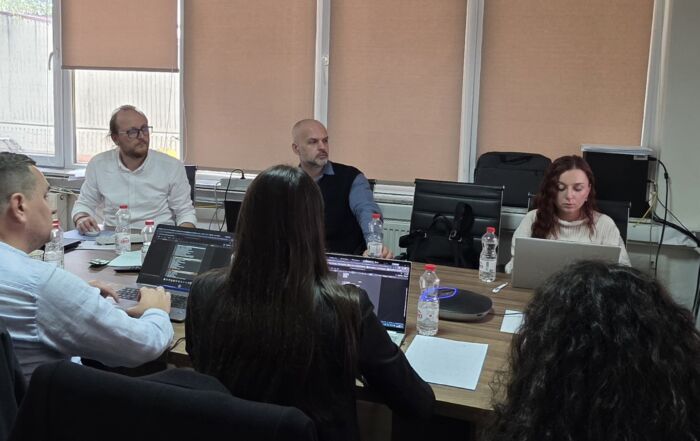
The State Council of Quality (SCQ) of the Kosovo Accreditation Agency (KAA), at its meeting held on 30 June 2025, approved the revised Standards for Doctoral Programmes as well as the updated Regulation on Monitoring and Post-Accreditation Procedures.
This decision follows an inclusive and consultative process involving all key stakeholders in higher education in the Republic of Kosovo.
The newly adopted PhD evaluation standards are the result of a comprehensive five-year review process initiated after the original standards were first introduced in 2020. The revised standards are structured across seven key areas: institutional framework, admission criteria, programme content, research environment, supervision, assessment, and research outcomes.
The revision process was supported by the SHER Programme, funded by the Austrian Development Agency (ADA), co-financed by the Ministry of Education, Science, Technology and Innovation, and implemented by the consortium of WUS Austria, ZSI, and OeAD.
In parallel, and with the objective of strengthening the quality assurance system and promoting greater transparency in higher education, the SCQ also approved the revised Regulation on Monitoring and Post-Accreditation Procedures.
The Regulation clearly stipulates that monitoring must take place at least once during the accreditation cycle and may involve on-site visits or remote evaluations. Monitoring includes the verification of compliance with accreditation conditions, changes in academic staff, infrastructure and resources, as well as internal quality assurance mechanisms.
As part of the post-accreditation process, higher education institutions are required to submit an implementation plan addressing the recommendations made by international experts. This plan must be structured, well-documented, and time-bound. Following the submission of the self-improvement report, the KAA appoints international experts to verify compliance with recommendations and to formally conclude the accreditation cycle.
At today’s meeting, the SCQ also reviewed several reports submitted by international accreditation experts and rendered decisions accordingly.

Full member of:

More From Latest News
State Council of Quality (SCQ) Holds Its 155th Meeting
On 26 October 2026, the State Council of Quality (SCQ) of the Kosovo Accreditation Agency (KAA) held its 155th regular meeting. During the meeting, the Council reviewed important matters related to the accreditation and reaccreditation [...]
KAA Participates in the ENQA General Assembly 2026 in Las Palmas de Gran Canaria, Spain
Prof. Avni Berisha, President of the State Council of Quality (SCQ), and Arianit Krasniqi, Director General of the Kosovo Accreditation Agency (KAA), participated in the General Assembly of the European Association for Quality Assurance in [...]
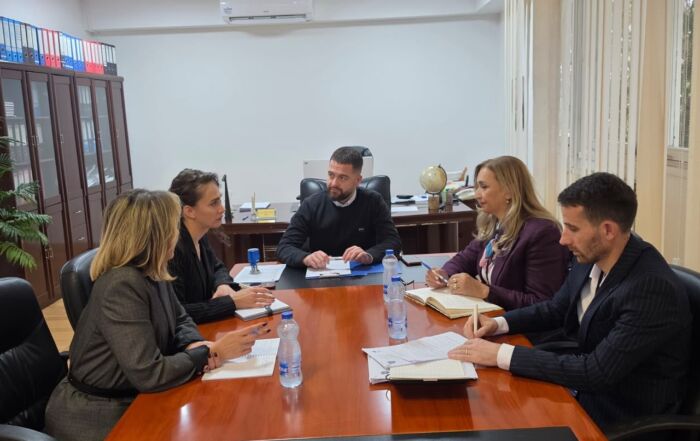
Monitoring Process Begins for the 2026/2027 Academic Year
The Monitoring Division has commenced the monitoring process for the 2026/2027 academic year, within the scope of its mandate and responsibilities for overseeing the implementation of quality standards in higher education institutions. Today, monitoring activities [...]
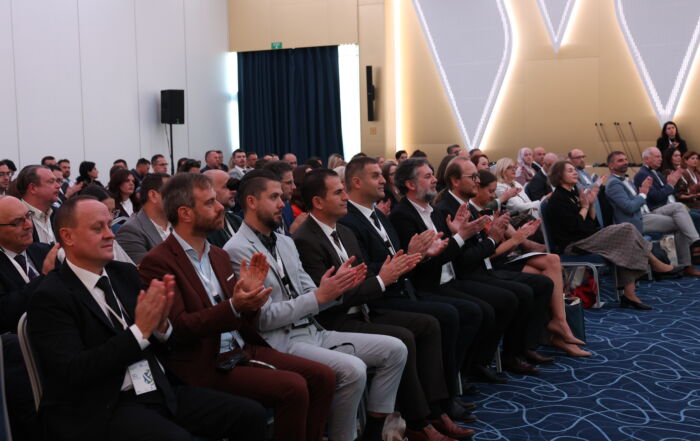
4th KAA Annual Conference 2026 Successfully Concluded
The Kosovo Accreditation Agency (KAA) successfully held its 4th Annual Conference on 29 September 2026 in Prishtina, under the theme “Internal Quality Assurance in Higher Education Institutions: From Evaluation to Quality Culture”. The conference brought [...]
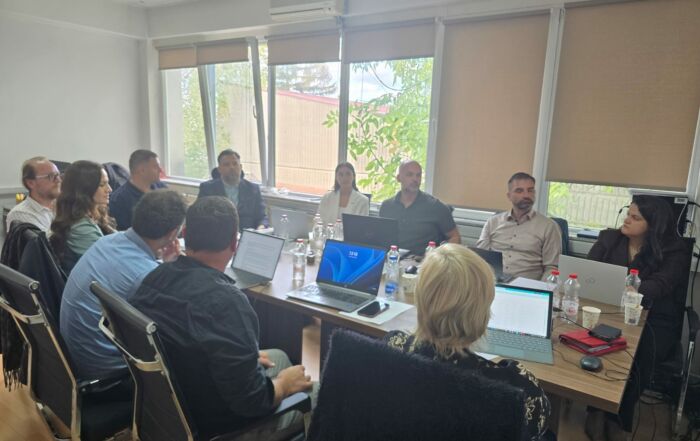
SCQ Held Its Regular Meeting
The State Council of Quality (SCQ) of the Kosovo Accreditation Agency (KAA) held its regular meeting on 28 September 2026, during which a number of important matters related to quality assurance in higher education in [...]
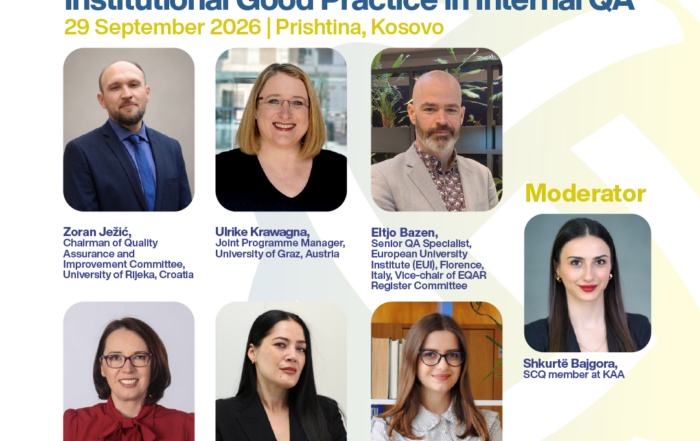
Panel 2: “Institutional Good Practice in Internal Quality Assurance”
Panel 2: “Institutional Good Practice in Internal Quality Assurance” will bring together Zoran Ježić, Ulrike Krawagna, Eltjo Bazen, Majlinda Gjelaj, Furtuna Mehmeti, and Fortina Kastrati, offering diverse perspectives and experiences from higher education institutions in [...]